
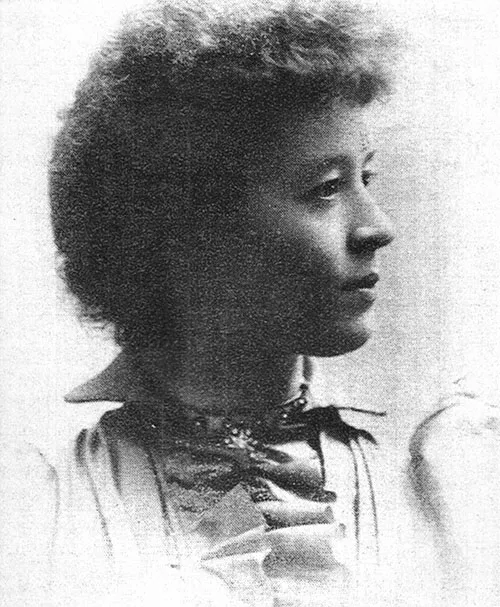
As is the case with many of the properties at GOTL, the house in which Jennie Munger Gregory lived during the summer months for roughly 40 years was multi-purpose.
When Jennie and her husband Bert purchased the property in 1919, the house was nearing the century mark, having been constructed by the Fitch family beginning in 1823. It was the first frame house in Geneva Township and the first frame structure on the lakeshore in Ashtabula County.
The house served the Fitch family for decades, then in August 1865, it was purchased by the Putnam family. The Putnams, George C. and Mary “Polly” Temple Putnam, of Pennsylvania, purchased 30 acres on the lakefront. They sold their home in Lafayette, Pa., and moved into the former Fitch house in 1866. George C. commented, “What a grand view,” and the name stuck. Their place was named Grand View Farm.
The Putnam family farmed the land, but, like many farmers at GOTL in the late 1800s, they recognized that tourism offered greater economic potential. Ida Avis Putnam married Warren Spencer and built Shady Beach. Flora Alice Putnam married John McManus, and they built the Moon Glow cottages. George E. and Alice lived in Ashtabula. After the death of his father, George C., in 1908, George Elbert purchased the farm from his siblings and six years later developed “Grandview Allotment.” The farmhouse and two acres were reserved; the remaining land was used for cottages and homes along Putnam and Grandview lanes.
George Elbert’s daughter, Florence Ford, and her husband, John, built the Ford Cottages on Putnam Lane. Florence’s daughter, Grace Payne, and her husband, Hugh, ran the cottages until 1999.
Meanwhile, George Elbert sold the former Fitch home to Jennie and Bert Gregory in 1919. Bert died shortly thereafter, and Jennie used the house as her summer home and ran a boarding house at Grand View.
The house
Built in federal style, the front of the house faced the road that traveled along the lake shore. Erosion eventually required a new “Lake Road,” which was cut to the south, shifting the front of the house to the back.
Nevertheless, astute visitors will notice that, as they enter the porch facing the lake, this is the front of the house, and that an addition has disrupted the symmetry of the original federal design. Two windows flank the doorway on either side, and prior to the addition, the windows were symmetrical with respect to the door. Evidence of the addition to the west is further revealed in the beam that runs through the parlor, originally an exterior beam.
There are four rooms downstairs: a kitchen closed to the public, the Walter Jack Research Room, parlor, and dining room. The original house would have had a central hallway running down the center of the structure, adjacent to the staircase. This was later closed off to provide additional space.
Of special interest is the Christian door on the front of the house; the open Bible and cross of the six-panel door would have indicated to a traveler that this was a place of Christian hospitality.
The small rooms upstairs were for guests, who shared a bathroom that has since been removed. A very small bath on the first floor provides facilities for the staff; there are no public restrooms at the museum.
The Ashtabula County Historical Society became the owner of this property following the probate of Jennie’s estate. While the society has operated it as a headquarters, research room, and house museum, the museum’s greatest significance may lie in helping visitors understand the austere accommodations that were common during the heyday of GOTL.
Jennie Munger Gregory, who loved parties and having guests stay with her, got into the hospitality business after her husband’s death, shortly after the couple purchased the home. The couple also built the Casino dance hall, but it was sold after Bert’s death.
Very few of the museum’s furnishings are part of the Munger collection. The items displayed are mostly “antiques,” which would have been disdained by guests and the owner because anything old was considered inferior at the time.
The museum is open on Wednesday and Thursday afternoons during the summer months.
From Fitch to Gregory:
The following narrative is from an excerpt from an article printed in the June 19, 1977, Geneva Free Press:
“In 1823-26 Solomon Fitch built the first frame house on the Lake Erie shore. The property was prominent in local history, housing many of the visitors who arrived or departed from ‘Fitch’s Land.’ From this landing, the major lumber industry of the area was carried on, with ships loaded with oak timbers and barrel lumber departing for Buffalo, N.Y.
“Jennie Munger Gregory, daughter of a pioneer family, purchased the property in 1906 (actual date was 1919), using it as a summer home for many years. Her winter home was on North Broadway, Geneva. Following Mrs. Gregory’s death in 1960, it was found that her will gave the lake home to the Ashtabula County Historical Society, provided it would be used as a museum known as the Jennie Munger Gregory Memorial. The officers and trustees of the society met on April 13, 1961, and voted to accept the house and property.
“The museum was dedicated on July 22, 1962. It includes the Walter Jack Memorial Genealogical Library. … One large room at the museum is dedicated as the Walter Jack Memorial Library. It honors the later historian, Walter Jack, the society’s only honorary member. He was an ardent preserver of history. His writings appeared in 16 newspapers across the eastern United States. His photography was also well known.”
Jennie Munger Gregory, who died more than 50 years ago, is recalled as a woman who loved to party, disliked cameras, and, to little boys who would wander onto her property, as a stern, scary person. One GOTL resident says that Jennie took a liking to him as a child and invited him for tea; he recalls the experience as being uncomfortable.
It’s said that Jennie’s ghost still roams about Grand View; volunteers who work in the building report sensing her presence.
The Ashtabula County Historical Society still owns Grand View and operates it in accordance with the terms of the will. The museum is open on certain days of the summer months.
Address
5685 Lake Rd. E.
Geneva-on-the-Lake, OH 44041